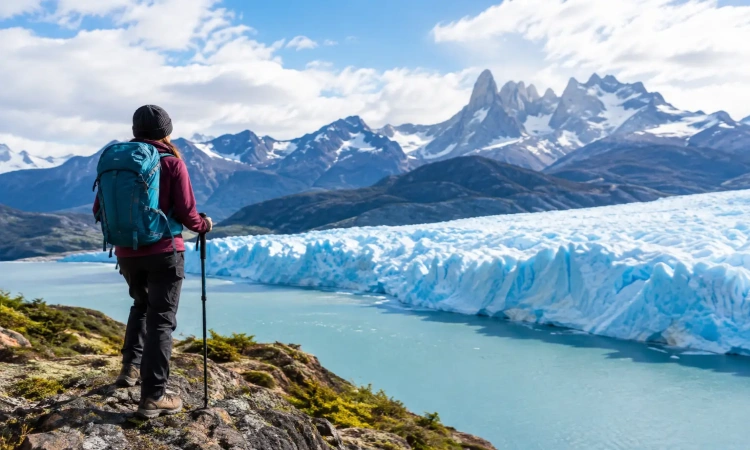
Grey Glacier is where the W Trek shifts from dramatic mountain hiking to the raw scale of the Southern Patagonian Ice Field. A Grey Glacier hike in Torres del Paine can mean several different experiences: hiking to panoramic viewpoints, reaching the glacier by boat, or joining a guided walk on the ice itself. Choosing the right one depends on your route, available time, fitness, and how much advance planning you can build into your Patagonia itinerary.
For most trekkers, the reward begins well before they reach the glacier. The trail to Grey passes through lenga forest, crosses exposed slopes above Lago Grey, and opens onto views of a blue-white ice wall stretching between dark granite peaks. It is one of the most memorable sections of the park, but it also requires smart route sequencing because boats, refugios, campsites, and guided glacier departures operate on fixed schedules.
What a Grey Glacier Hike in Torres del Paine Includes
The classic hiking approach starts from Paine Grande, the western hub of the W Trek. From there, hikers follow the Grey Valley trail north toward Refugio Grey and the first viewpoints over Lago Grey. The route is generally considered moderate, with long but gradual climbs, occasional muddy ground, and wind exposure that can make an otherwise manageable day feel more demanding.
Paine Grande to Refugio Grey is roughly 7 miles each way, depending on the exact start and finish point. Many W Trek itineraries treat it as a one-way hiking day: walk from Paine Grande to Refugio Grey, sleep there or at the nearby campground, then continue farther into the valley the next day. This is the better choice for travelers who want time to reach the suspension bridges and potentially add a glacier activity.
If you are based at Paine Grande, a day hike to Grey and back is possible, but it is a substantial day. Expect roughly 8 to 10 hours of walking once breaks, weather, and viewpoint stops are included. It works best for strong hikers traveling light who are comfortable returning on the same trail and who have confirmed their catamaran timing from Paine Grande.
The first Grey viewpoint provides a broad look across the lake toward the glacier. Continuing beyond Refugio Grey leads to a sequence of higher viewpoints and suspension bridges over deep ravines. The second bridge is a standout: from its narrow span, the glacier appears close enough to reveal crevasses, fractured blue ice, and the slow movement of the ice field into the valley.
Hiking to the bridges versus walking on the ice
A trail hike to the viewpoints and bridges is part of the independent trekking network. You need the appropriate park itinerary, overnight reservations if applicable, and enough time to complete the stage safely.
An ice hike is a separate guided excursion. Participants typically meet at or near Refugio Grey, receive crampons, helmets, and technical instruction, then travel by boat toward an access point on the glacier. Conditions determine the exact route on the ice, which may include crevasses, meltwater channels, ridges, and brilliant blue formations. No prior glacier-walking experience is usually required, but participants need solid mobility, proper footwear, and the ability to walk on uneven terrain for several hours.
The trade-off is simple. The trail delivers bigger valley views and fits naturally into a W Trek. The guided ice hike creates a far more immersive glacier experience, but it requires a dedicated time block, a confirmed operating date, and flexibility for weather-related changes. Many travelers do both when their itinerary includes two nights at Grey.
The Best Route for Your Itinerary
Your ideal Grey Glacier plan depends on whether the glacier is one stop on a larger trek or the centerpiece of a shorter visit.
For a standard west-to-east W Trek, begin with the catamaran across Lake Pehoe to Paine Grande. Hike to Grey on your first trekking day, overnight at Refugio Grey or the campground, then either take a guided glacier activity or hike to the bridges the following morning. Return to Paine Grande afterward and continue toward the French Valley. This pacing avoids turning the Grey section into a rushed out-and-back effort.
If your schedule only allows one night at Paine Grande, a long day hike toward Refugio Grey is still rewarding. Set off early, carry food and water, and establish a turnaround time before you leave. Weather can slow progress, particularly when strong gusts hit the open sections near the lake.
Travelers not completing the W Trek can approach Grey from the southern side of Lago Grey. Boat navigation from the Lago Grey area offers a close view of floating icebergs and the glacier front without the full trek from Paine Grande. This is a strong option for visitors with limited time, families with mixed hiking abilities, or anyone who wants glacier scenery without carrying an overnight pack.
The O Circuit offers another perspective. Hikers completing the full circuit reach the Grey sector after crossing John Gardner Pass, one of the most demanding and spectacular sections of the park. From the pass, the view over Grey Glacier and the Southern Patagonian Ice Field is immense. It is not a shortcut to the glacier, however. This route requires several additional days, backcountry readiness, and reservations across the entire circuit.
Timing, Weather, and Physical Preparation
The main trekking season typically runs from October through April. December through February brings the longest days and the highest demand for beds, campsites, boats, and guided glacier activities. March and April can offer quieter trails and autumn color, though days are shorter and weather remains unpredictable.
Patagonian weather is not an occasional inconvenience on the Grey trail. It shapes the experience. Wind can arrive suddenly, rain can make wooden walkways slick, and low cloud can hide views that were clear an hour earlier. A bright morning does not remove the need for rain layers, and a wet forecast does not necessarily mean the day will be a washout.
For the hiking route, prepare for a full day with elevation gain rather than technical climbing. Trekking poles are particularly useful on uneven descents and in high wind. Sturdy, waterproof hiking boots with ankle support are a better choice than lightweight sneakers, especially if you plan to walk beyond Refugio Grey to the bridges.
For an ice hike, follow the operator’s required gear list closely. Crampons only work properly with supportive hiking boots, not soft trail shoes. Bring waterproof outer layers, insulated gloves, sunglasses, sunscreen, and a small daypack that keeps spare layers dry. The glacier can feel colder than the trail due to wind and reflected light from the ice.
Grey Glacier Logistics That Can Make or Break the Day
Grey is one of the park’s most reservation-sensitive areas. During the main season, refugio rooms, campsites, catamaran seats, and glacier excursions can sell out well before your travel dates. Booking the hike first and trying to connect the overnight logistics later is risky, particularly if your goal is to combine the trail, suspension bridges, and ice hiking.
Build your plan around your accommodation location. Staying at Refugio Grey gives you the greatest flexibility for bridge hikes and guided activities. Staying at Paine Grande gives you easier access to the Lake Pehoe catamaran and onward W Trek stages, but can turn a Grey visit into a much longer day. Neither choice is universally better - it depends on whether glacier time or overall W Trek efficiency is the priority.
Also account for the movement of your main luggage. Trekkers generally carry only what they need on the trail, while larger bags are handled through arranged storage or transfer plans. If you are joining a boat-based excursion, verify where you need to meet, how much time the walk from your lodging requires, and whether your backpack can be stored during the activity.
A structured itinerary is especially useful here because the connections are interdependent. The arrival bus into the park, catamaran departure, Paine Grande overnight, Grey lodging, activity check-in, and next day’s trek all need to line up. Booking Patagonia Travel can help organize these components into a route that leaves room for the glacier rather than treating it as a last-minute add-on.
A Smart Two-Night Grey Glacier Plan
For hikers who want the fullest Grey experience without racing through it, two nights in the Grey sector is the most balanced approach.
On the first day, take the Lake Pehoe catamaran to Paine Grande and hike north to Refugio Grey. Start early enough to enjoy the viewpoints along the way instead of chasing daylight. After checking in, use the afternoon for the nearby first viewpoint or simply watch icebergs drift across Lago Grey.
On day two, choose your priority. A guided ice hike delivers the most direct encounter with the glacier. If you prefer a self-powered day on the trail, hike north to the suspension bridges, allowing time to stop safely and take in the views. Travelers with enough energy and an early start may be able to combine a shorter bridge hike with another activity, but this should never be assumed without confirming departure times and trail conditions.
On the third day, return to Paine Grande and continue the W Trek or take the catamaran out. This sequence creates breathing room for wind delays, fatigue, and the simple desire to spend longer in one of Patagonia’s most extraordinary landscapes.
Grey Glacier rewards travelers who plan for more than a photo stop. Give it an overnight, protect space for changing weather, and choose the experience that fits the way you want to move through Torres del Paine - on the trail, on the lake, or directly across the ice.
"Discover the best ways to experience Grey Glacier in Torres del Paine: hike to scenic viewpoints and hanging bridges, cruise among icebergs, or walk on the ice, with practical tips for planning your route, reservations, and gear."
Plan a Grey Glacier hike in Torres del Paine with routes, timing, boat access, gear advice, and booking logistics for confident Patagonia trekking experience.