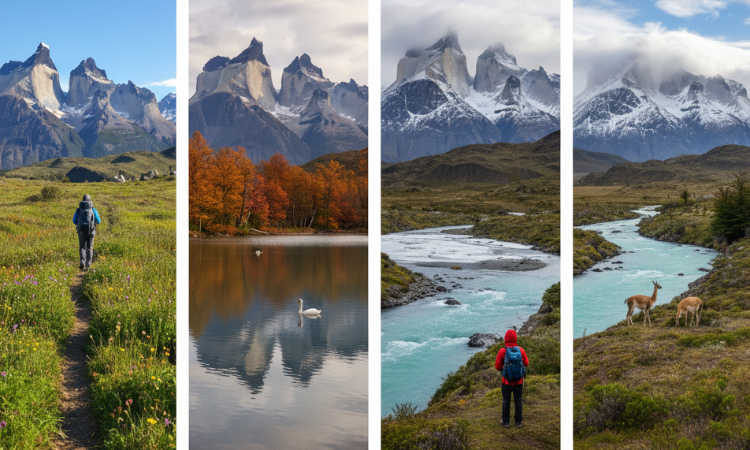
Plan Your Trip by Season
Choosing the best time to visit Torres del Paine is essential to live the experience you dream of. Each season transforms Patagonia: from wildflowers in spring to fiery autumn skies and the silent whiteness of winter.
In this guide you’ll find:
- How the park’s weather changes.
- Pros and cons of each season.
- Practical tips on gear, bookings, and transport.
After more than a decade exploring Torres del Paine, I share my insights to help you choose the perfect moment for your adventure.
"Discover how Torres del Paine transforms each season and choose the best time for your adventure."
Introduction
If you dream of seeing the Towers illuminated by sunrise or walking under skies that shift from deep blue to fiery red in minutes, choosing the best time to visit Torres del Paine is as important as deciding your route. After more than ten years living and exploring Patagonia, I can assure you there’s no single answer: each season offers a different experience for backpackers, trekking lovers, and fans of Patagonia photography.
In this guide, I’ll tell you what the weather in Torres del Paine is like throughout the year, what to expect in spring, summer, autumn, and winter, and how to choose the season that best connects with your travel style.
The weather in Torres del Paine: unpredictable and fascinating
In a single day, you can have bright sun, strong wind, light rain, and a double rainbow. The phrase “four seasons in one day” is the norm here. Summer winds can be intense, humidity and rain are stronger in the west (Grey Glacier sector), and temperatures range from below zero in winter to mild values in summer.
- Wind: a protagonist all year, most noticeable in summer.
- Precipitation: higher in the west; the east is usually drier.
- Temperature: cold to mild; always travel with layers and waterproof gear.
Expert tip: plan with flexibility and pack for changing conditions. Patagonia rewards those who come prepared.
Spring (September–November): nature’s rebirth
Spring brings wildflowers, clear skies, and active wildlife. It’s ideal for those seeking tranquility and moderate prices in the low season in Torres del Paine.
Why choose spring
- Soft, stable light for Patagonia photography.
- Fewer visitors on trails and viewpoints.
- Great opportunity for wildlife spotting and wide panoramas.
Favorite moment: hearing the roar of the wind while guanaco calves play beneath the Paine Horns.
Summer (December–February): the backpackers’ classic
With very long days and more stable weather, summer is the prime season for trekking in Torres del Paine. Many complete the W Trek or the O Circuit with a higher chance of clear trails.
Things to keep in mind
- High demand: high season in Torres del Paine = book well in advance.
- Strong winds on exposed passes; use trekking poles and secure your hat/glasses.
- Sunrises and sunsets that seem endless.
Autumn (March–April): unique colors and dramatic skies
The lenga forests turn red, orange, and yellow; the contrasts with snow-capped peaks make this season a favorite for many photographers.
Autumn advantages
- Fewer visitors and a more intimate atmosphere on the trails.
- Often more stable weather than in spring.
- Low, golden light: perfect for capturing the Paine Massif.
Field confession: nothing compares to hearing the wind between the Paine Horns under a blazing autumn sky.
Winter (May–August): the park’s silent face
The most solitary and challenging time. Several routes and services limit operations, but the reward is a dreamlike snowy landscape, still lakes, and overwhelming peace.
Who winter is for
- Travelers seeking silence, contemplation, and minimalist photography.
- People equipped for cold and snow, ideally with a certified guide.
- Explorers with logistical flexibility (less transport available).
Season comparison
| Season | Pros | Cons |
|---|---|---|
| Spring (Sept–Nov) | Fewer people; soft light for photos; active wildlife | Weather still unstable; possible snow patches |
| Summer (Dec–Feb) | Long days; more stable weather; most trails open | More tourists; higher prices; strong winds |
| Autumn (Mar–Apr) | Spectacular colors; fewer visitors; dramatic skies | Shorter days; falling temperatures |
| Winter (May–Aug) | Solitude; snowy landscapes; serene atmosphere | Limited access and routes; intense cold |
Practical tips for choosing your best season
Booking and logistics
- Book in advance (especially in summer) for campsites, refuges, and transfers.
- In winter, confirm transport schedules and availability ahead of time.
Recommended gear
- Layering system: thermal base, insulation, and waterproof/breathable shell.
- Wind and rain protection, gaiters, hat, gloves, sunscreen, and UV glasses.
- For photography: extra batteries (cold drains them fast) and a waterproof cover.
Safety on the trail
- Check the weather report and trail conditions before heading out.
- In winter conditions or if inexperienced, consider a certified guide.
Conclusion: the best season is yours
The best time to visit Torres del Paine depends on what moves you: long hikes under the summer sun, fiery autumn skies, spring flowers, or the snowy stillness of winter. Choose with your heart, travel prepared, and let Patagonia do the rest.
Check real-time availability and book your trekking in Torres del Paine, tours, and accommodations all in one place with Booking Patagonia.
Still deciding when to go to Torres del Paine? Get inspired by our guides: W Trek, and O Circuit