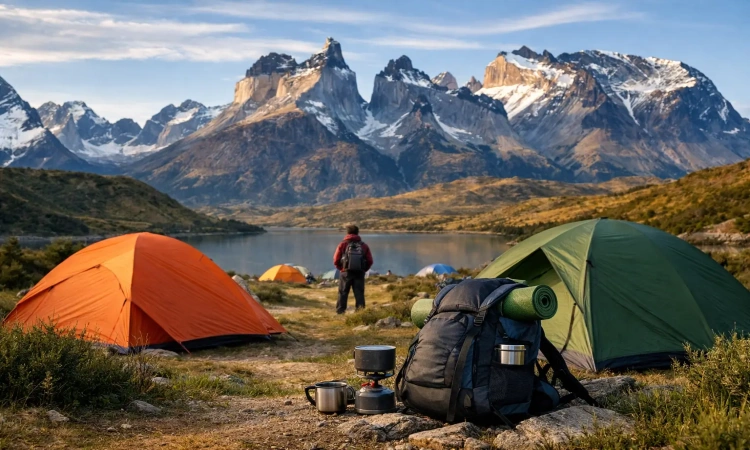
Camping Torres del Paine looks simple on a map until you start matching campsites, route direction, ferry schedules, park entry, and daily hiking distances. That is where most travelers get stuck. The park is one of the best trekking destinations in the world, but it is not a place to improvise once you arrive.
If your goal is to sleep in the park and experience Patagonia at trail level, camping is often the most immersive option. It can also be the most cost-effective compared with refugio beds, but only if your route, reservations, and equipment match the reality of the trek. In Torres del Paine, the difference between a great camping trip and a stressful one usually comes down to planning details.
Camping Torres del Paine: how it works
Camping in Torres del Paine is regulated and reservation-based. You cannot just walk into the park, pick a scenic spot, and set up a tent. Overnight stays must be at authorized campsites, and those campsites are tied to your trekking route and nightly sequence.
For most hikers, that means choosing between the W Trek and the O Circuit. The W Trek is the shorter and more accessible option, usually completed in 4 to 5 days. It covers the park's headline sections: Base Torres, the French Valley or French viewpoint area, and Glacier Grey. The O Circuit is the full loop, usually 7 to 9 days, adding the quieter northern backcountry and the John Gardner Pass.
That choice matters because campsite availability is limited and highly specific. If one night is sold out, your whole route may need to change. This is why travelers who wait too long often end up with awkward itineraries, extra-long hiking days, or no viable circuit at all.
Which type of camping experience do you want?
Not all camping in Torres del Paine means carrying a full expedition setup. There are two main ways to do it, and the better option depends on your budget, fitness, and tolerance for weight.
Fully equipped camping
This is the lighter and more convenient option. At many campsites, you can book a ready-made setup with the tent already pitched and the sleeping gear provided. For travelers flying in from the US or combining Patagonia with a broader Chile or Argentina trip, this removes a major packing problem.
It also makes the W Trek much more manageable if you want to hike with a lighter backpack. The trade-off is cost and availability. Equipped campsites tend to book out fast during peak months, and you still need to confirm exactly what is included, since bedding, sleeping bags, and mats can vary by provider and location.
Bring-your-own gear camping
This gives you more control and may lower total trip cost, especially on longer routes. It also appeals to experienced backpackers who are comfortable carrying a full load through wind, rain, and steep terrain.
The trade-off is obvious by day two. Patagonia weather can turn a manageable pack into a tiring one, especially on climbs to Base Torres or over John Gardner Pass. If you are not used to hiking several days with full gear, the weight matters more here than it does on a weekend trip at home.
Best routes for camping in Torres del Paine
For most first-time visitors, the best camping route is the W Trek. It delivers the biggest scenery with fewer days, simpler logistics, and more flexibility if you need to work around limited availability.
A typical west-to-east W Trek starts with the catamaran across Pehoe Lake, then heads toward Grey, continues through the Paine Grande sector, explores the French Valley, and finishes with the hike to Base Torres before exiting near Laguna Amarga. This direction works well for many travelers because the route builds toward the towers and often fits smoothly with bus connections.
The east-to-west version also works, especially when campsite space dictates your schedule. There is no universally correct direction. The better option is the one that creates sensible daily distances and secures the nights you need.
The O Circuit is the stronger choice for experienced trekkers who want a longer, more remote trip. It includes the W's best-known sections but adds a wilder rhythm and less crowded campsites on the north side of the park. It is also more demanding. Weather exposure is greater, resupply is not simple, and once you start the circuit, your margin for error is smaller.
Campsites, facilities, and what to expect
Campsites in Torres del Paine are not all the same. Some feel relatively serviced, with nearby refugios, meals, hot showers, and small shops. Others are more basic and function mainly as controlled overnight points on the trail.
That matters when planning food, comfort, and pacing. If you expect every stop to offer the same services, you can end up underprepared. Some camps are ideal if you want access to meals and less to carry. Others are better for trekkers who are self-sufficient and focused on route completion.
Even at serviced sites, do not expect luxury. Weather exposure is part of the experience. Wind can be intense, ground conditions vary, and common areas can be busy in high season. The reward is that you wake up inside one of the most dramatic mountain landscapes in South America, already on the trail when day hikers are still in transit.
When to book camping Torres del Paine
The main trekking season runs from roughly October through April, with December through February as the busiest period. If you want the broadest choice of campsites and route sequences, book early. This is especially true for holiday travel, peak summer dates, and the O Circuit.
Shoulder season can be excellent for travelers who prefer fewer crowds, but the weather is less predictable and some services may feel tighter. Early spring and late fall bring stronger uncertainty around conditions, and that affects both gear choices and hiking times.
The practical rule is simple: once your flights are taking shape, your park reservations should follow quickly. Torres del Paine is not a destination where last-minute camping plans are low risk.
Weather, gear, and daily pacing
Patagonia does not reward casual packing. Conditions can shift from sun to cold rain to hard wind in the same day. Good camping gear is not optional, and neither is realistic pacing.
Your clothing system should be built around layers, waterproof protection, and wind resistance. Cotton is a bad idea. Footwear should already be broken in, and trekking poles are worth serious consideration, especially if you are carrying your own tent and sleeping gear.
Daily mileage on paper can look moderate, but terrain and weather change the equation. A day with strong headwinds or heavy rain feels longer. So does any stage that includes a major out-and-back hike such as Base Torres or the French Valley. Strong hikers can move quickly, but smart itineraries still leave room for weather and fatigue.
Getting the logistics right
The trek itself is only part of the job. The supporting logistics are where many self-planned trips become messy.
You need to line up park access, long-distance bus timing, possible catamaran connections, campsite sequence, and entry or exit points that match your route direction. If you are adding Puerto Natales hotel nights before or after the trek, those should support your transport windows rather than fight them.
This is also where route planning becomes less theoretical. A beautiful itinerary is not useful if it requires impossible transfers or mismatched overnight capacity. Booking Patagonia Travel exists for exactly this reason - to turn a complex set of moving parts into a workable trekking plan with real availability behind it.
Is camping the right choice for your trip?
Camping is the right fit if you want the strongest connection to the park, earlier trail access, and a more complete trekking experience. It is also ideal if refugio availability is limited or if you prefer spending your budget on a longer route rather than a bed in shared lodging.
It may be the wrong choice if you sleep poorly in wind, strongly prefer private indoor comfort, or are carrying little trekking experience into a multi-day hike. In those cases, a refugio-based trip or a mixed refugio-camping itinerary may deliver a better overall experience.
There is no prize for making the trip harder than it needs to be. The best Torres del Paine plan is the one that fits your pace, your gear tolerance, and the kind of Patagonia experience you actually want.
If you get the reservations, route flow, and packing strategy right, camping here is not just a cheaper way to stay in the park. It is the version of Torres del Paine that lets you hear the wind before sunrise, step straight onto the trail, and feel like you are moving through the landscape instead of passing through it.
"Camping in Torres del Paine is one of the most immersive ways to experience Patagonia, but it requires careful planning. This guide explains how authorized campsites work, how to choose between the W Trek and the O Circuit, when to book, what gear to bring, and how to organize your logistics before arriving in the park."
Planning camping Torres del Paine? Learn routes, campsites, booking timing, gear, weather, and logistics for a smoother Patagonia trek.